
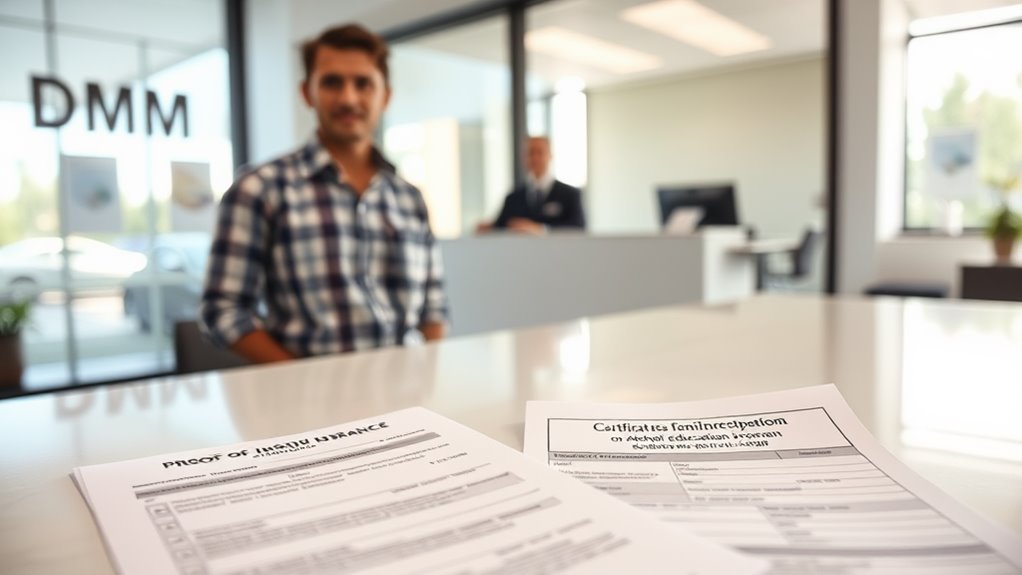
Many people underestimate the complexity involved in reinstating a DUI-suspended license. It's not just about waiting out the suspension period; you'll need to complete specific programs and meet financial obligations. Understanding the full scope of requirements is essential. Whether you're aware of the necessary steps or not, knowing what's involved can greatly impact your path to regaining your driving privileges. Let's explore what you need to do next.
Have you recently faced a DUI conviction and are now wondering about the steps to get your license reinstated? Understanding the requirements for reinstatement can feel overwhelming, especially considering the legal consequences of a DUI conviction, which often lead to a suspended license. Depending on your driving history, this suspension can last anywhere from 120 days to five years.
Steering through the reinstatement process requires you to meet specific criteria, including completing a state-approved DUI risk reduction program and fulfilling various financial obligations. Before you can even apply for reinstatement, you typically need to wait at least 120 days after your suspension begins. This waiting period allows you time to gather necessary documentation and prepare for the subsequent steps. One of the most significant requirements is completing a DUI risk reduction program. These programs focus on educating individuals about the risks associated with alcohol and drugs. You'll need to obtain a certificate of completion from an approved program, as this documentation is essential for your reinstatement application. Additionally, you must meet the 120 days suspension requirement to ensure that you have fulfilled the minimum waiting period before proceeding with the reinstatement process. Furthermore, you may also need to provide proof of SR-22 insurance to demonstrate financial responsibility.
In addition to meeting educational requirements, you must also address your financial obligations. Reinstatement fees generally range from $200 to $410, depending on the state and payment method. Along with these fees, you'll likely need to pay any court-ordered fines associated with your DUI conviction. It's important to make sure that all fines are fully paid before you apply for reinstatement; otherwise, your application will be denied.
Moreover, many states require proof of SR-22 insurance, which serves as a financial responsibility document. This insurance can greatly increase your premiums, so be prepared for the added financial burden. Obtaining SR-22 insurance may also require coordination with an insurance provider, which can be complex. A DUI defense attorney can assist you in managing this part of the process, making certain you meet all insurance requirements.
Once you've completed your DUI program, paid the required fees, and secured your SR-22 insurance, you can submit your application for reinstatement to the Department of Motor Vehicles (DMV). This administrative process may involve additional steps, such as attending a hearing or providing further documentation. It's wise to consult with a DUI defense attorney who can represent you at any necessary hearings and help confirm you've complied with all requirements.
After regaining your driving privileges, maintaining compliance is essential. You must keep your SR-22 insurance active without lapses and avoid any further traffic violations. Failing to do so can lead to another suspension, complicating your efforts to maintain your license.
Conclusion
To sum up, reinstating your DUI-suspended license requires careful attention to detail. You must complete a state-approved DUI risk reduction program, wait at least 120 days, and provide proof of SR-22 insurance. Don't forget to pay all fines and the necessary reinstatement fees. Remember, "a stitch in time saves nine"—by staying organized and proactive, you'll navigate the reinstatement process more smoothly and get back on the road sooner.